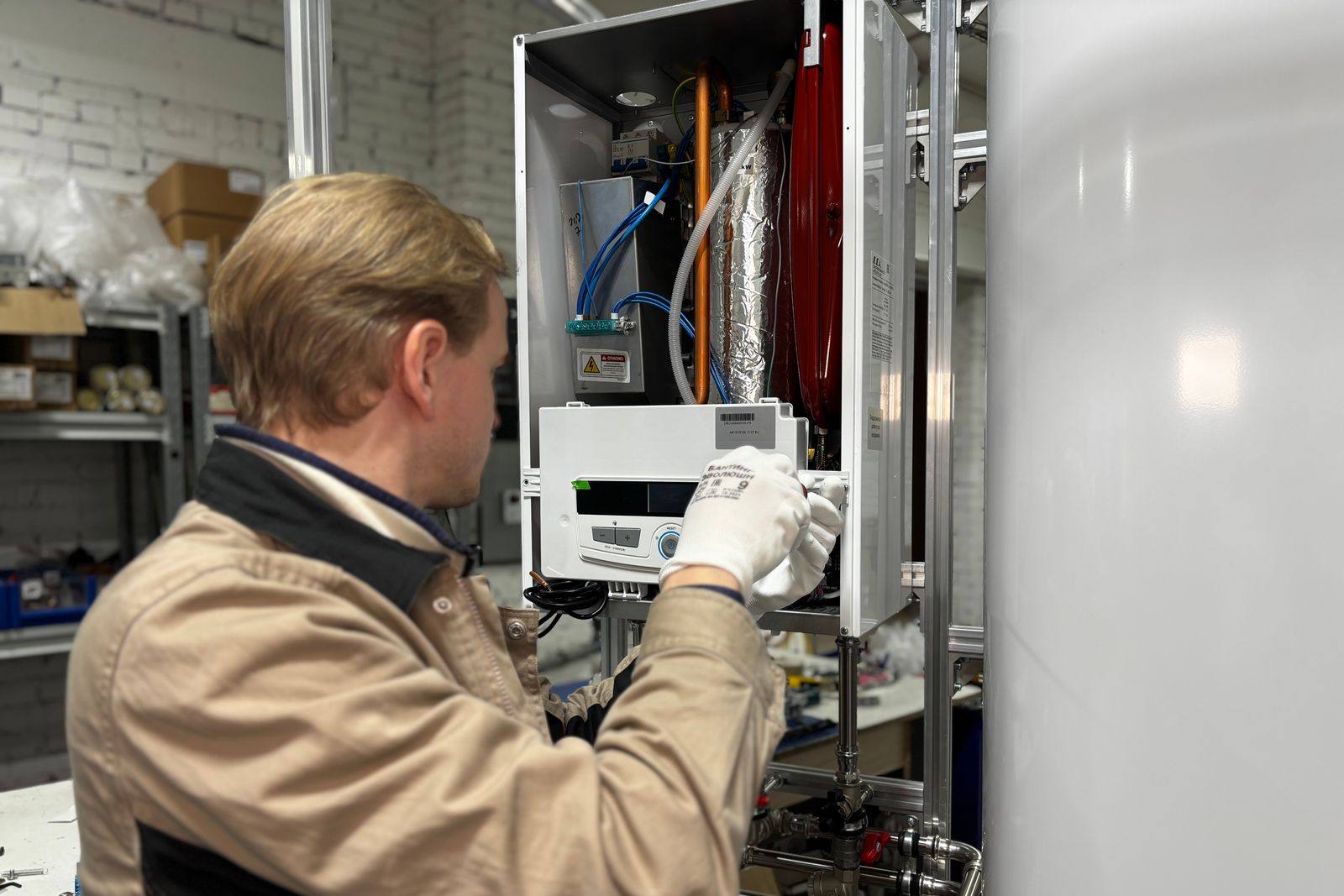
Water Softener Installation built for Provo conditions
Provo sits at the foot of the Wasatch Range in Utah County, and its water comes from springs, wells, and reservoirs. The water is hard — local water reports put hardness in the 10 to 15 grains-per-gallon range, though some local pages report higher figures, so the exact number varies by source and by neighborhood. Hard water leaves scale on fixtures, shortens the life of water heaters and appliances, and makes soap harder to rinse.
Water softener installation puts a unit on the home's main water line that removes the calcium and magnesium that make water hard. Hard water is not harmful to health, but it leaves scale on fixtures, spots on glassware, and residue on skin and hair, and it shortens the life of water heaters, dishwashers, and washing machines. A softener exchanges the hardness minerals for sodium, so the water no longer leaves scale behind. The work starts with a water test to measure the hardness, then the unit is sized for the home — the number of people, the number of bathrooms, and the water use — installed where the main line enters the house, and set to match the water's hardness. A salt-free conditioner is the alternative: it does not remove the minerals, but changes how they behave so they do not form scale as easily.
Why water softener installation fails here
Hard water is the main issue: mineral scale builds up on fixtures, inside water heaters, and in appliances, and it makes laundry and dishes harder to clean. The hardness varies across the valley depending on whether the supply is spring, well, or reservoir water.
Provo housing runs from older homes near downtown, through mid-century neighborhoods, to fast-growing suburbs. Older homes often have original plumbing with years of scale build-up, while newer homes are built with water treatment in mind from the start.
What you can get help with here
- - Water Softener Installation — Installing a water softener to remove hardness — less scale, softer skin, longer appliance life.
- - Salt-Based Water Softener — The standard softener — removing hardness minerals by ion exchange, with salt and regeneration.
- - Salt-Free Water Conditioner — A salt-free conditioner that changes how minerals behave, so they do not form scale as easily.
- - Water Softener Replacement — Replacing an old or failed softener — a worn-out unit, or one that no longer softens the water.
- - Water Softener Maintenance — Keeping a softener working — salt, regeneration, cleaning, and the checks that catch problems early.
Service area
Requests are accepted from Orem, Lehi, and Alpine and the rest of Utah County, Utah — 26 ZIP codes in total across 18 cities, each verified in the coverage feed. The service area page lists every ZIP code covered in each city.
How it works
Use the request form to describe the problem, when it started, and where you are. Your request is shared with independent local water softener installation providers who serve your part of Utah County, Utah. The provider discusses inspection, options, and pricing directly with you. There is no fee from this site and no obligation.
Frequently Asked Questions
How do I know if I have hard water?
White scale on taps, showerheads, and kettles, spots on glassware, dry skin after a shower, and appliances failing early from scale. A water test shows the hardness level and is the reliable way to confirm it — the visible signs are the reason to test.
What is the difference between salt-based and salt-free?
A salt-based softener removes the hardness minerals by exchanging them for sodium, and it needs salt and a drain. A salt-free conditioner does not remove the minerals — it changes how they behave so they do not form scale as easily. For very hard water, a salt-based softener is usually more effective.
How is a softener sized for my home?
The provider tests the water to measure its hardness, then sizes the unit for the home — the number of people, the number of bathrooms, and the water use. A unit that is too small will regenerate too often; a unit that is too large wastes salt and water.
How long does installation take?
Usually a day, including the water test, the installation, and setting the unit to match the water's hardness. A replacement using existing connections is usually quicker. The provider will explain the timing once the installation point has been surveyed.
Does a softener treat all the water in the home?
Yes — a softener is installed on the main line, so it treats all the water in the home. A point-of-use filter treats one tap only. If the problem is scale across the whole home, a whole-home softener is the right choice.